

It sounds so compelling: “let and forget”. Hand the keys to a letting agent, and the rent lands in your bank account each month while someone else deals with the leaking boiler. Leave it to them, and you get passive income.
But how much does property management actually cost landlords? While the headline cost including VAT of a fully managed letting service typically ranges between 14.4% and 20.4% of the gross rent, sometimes it’s all inclusive, and sometimes they charge for things that have traditionally been part of the management fee.
I quote the fees including VAT deliberately. Most landlords can’t recover VAT because residential rent is exempt from VAT, so the VAT isn’t a pass-through, it’s part of the price. When an agent quotes you “12% plus VAT”, read that as 14.4% of every month’s rent.
In this post, I explain what letting agents charge for full management, what’s included in the fee and what counts as an extra, and how the Renters’ Rights Act is quietly reshaping fees now that renewal fees have gone.
I also share the questions I’d ask about fees before signing with any agent, because the time to negotiate is when they’re keen to win your business, not once your tenants have moved in.
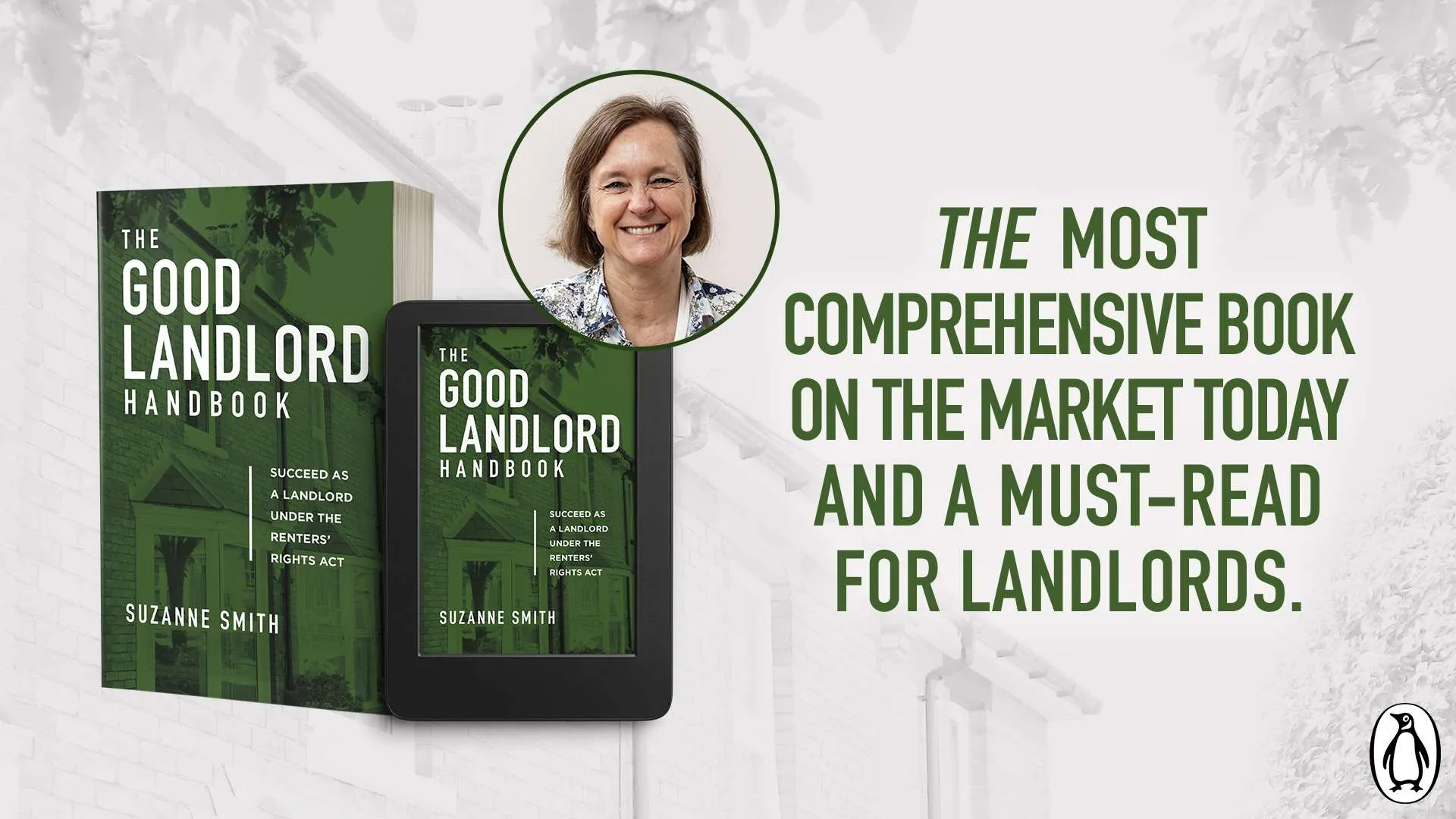
I cover letting agents in detail in my bestselling book, The Good Landlord Handbook: how to choose the right agent, what to watch out for in the contract, and how to get the best from them. If you have questions, you can ask me at the twice-monthly livestreams in my membership, The Independent Landlord Hub.
Quick links about full management fees for landlords
- How much are full property management service fees for landlords?
- What’s included in a fully managed letting service?
- What’s usually not included in the fully managed service fee?
- How much do letting agents charge for Section 13 rent increases?
- What are compliance fees for landlords?
- 13 questions for landlords to ask before choosing agents
- Final thoughts
How much are full property management service fees for landlords?
First of all, it should be relatively easy to find how much letting agents charge as Section 83 of the Consumer Rights Act 2015 requires them to provide full details of their fees on their website and at their business premises.
However, as I found myself, it can be tricky to find where the fees are on their website. I often had to resort to Google to help me find them.
The description of the fees must be sufficiently detailed so that the landlord can understand the service and cost covered by the fee. If the amount can’t “reasonably be determined in advance”, then the letting agents must describe how the fee will be calculated.
My advice is to print off the list of fees before you even talk to letting agents and property managers, and highlight those you do not consider reasonable.
Negotiating fees at the start will help you avoid problems and nasty surprises later. If the fees aren’t easy to find, or if they’re not there, choose another agent as it shows that they don’t value the experience of their customers, ie landlords. It’s not a good sign.
Most agents charge landlords a basic fee to provide a full management service, although not everything is always included. The basic fee is usually a percentage of the rent and starts at around 12% inc VAT of the gross rent per calendar month for independent letting agents, and goes up to around 20% inc VAT for some of the larger agents. This means that landlords on average spend over £2,600 each year per property on the management fee alone. (I use the average fee of 16% and the average rent (excluding London) of £1,370 in Q1 2026, according to Rightmove).
Landlords pay this property management fee, even if nothing goes wrong with the property and even if there are rent arrears, for so long as these tenants rent the property. (Unless the landlord terminates). The agents deduct this fee from the monthly rent which they collect on the landlord’s behalf. If the rent goes up, the fee goes up in parallel, just like commission.
Do bear in mind, however, that the cheapest agent won’t necessarily be the best. You should look for value for money. This means a good level of service for you and your tenants, which leaves the agent with a fair profit.
How much do large letting agents charge for full property management?
The headline fees charged by large national agents for full property management cluster between 18% and 20.4% of the rent including VAT, before the monthly extras like compliance fees.
Treat these fees as a starting point, as there is often room for negotiation.
| Letting agent | Full management | Extra for tenant find | Source and date |
|---|---|---|---|
| Andrews | 19.8% | £432 Tenancy Pack | Live fees page, as at 13 July 2026 |
| Connells | 19.2% Plus Property Regulation Check £11.40 pcm | None for tenant find; tenancy agreement £354 if bespoke terms | Standard fees and charges, April 2026 |
| Foxtons | 20.4% in year one (13.2% lettings + 7.2% management), then 19.2% multi-agency or 18% sole agency from year two | £450 long let tenancy agreement | Landlord Fees, as at 13 July 2026 |
| Hamptons | 18% Plus Risk & Regulation Service £48 pcm | Tenancy agreement £360 if Risk & Regulation Service not taken | Landlord Guide to Services, Fees and Charges (March 2026) |
| Leaders (Southern area) | 18% of the rent (sole agency), Plus Compliance Fee £14.40 pcm | 1.8 weeks’ rent, min £690 | Landlord Fees Schedule, Areas 1-5 South (June 2026) |
| Savills (Birmingham & Manchester) | Tenant find fee, plus 12% ongoing for the whole time the tenant stays | Tenant find fee of one month’s rent + VAT, plus tenancy paperwork £385 | Fees page, as at 13 July 2026 |
| Savills (London and rest of UK) | 20.4% of rent for the whole time the tenant stays (letting, receiving rent and management) | Tenancy paperwork £385 | Fees page, as at 13 July 2026 |
Full property management fees for independent agents
Quality independent letting agents tend to charge less for full property management than the large corporates, with 14.4% inc VAT (which is 12% before VAT) being the going rate.
Here are some examples of the fees that independent letting agents charge:
| Letting agent | Full management | Extra for tenant find | Source and date |
|---|---|---|---|
| Bricks & Mortar (Newcastle) | 14.4% | None | Landlord Fees, as at 13 July 2026 |
| Mansons (Newcastle) | 14.4%, min £90 pcm | 90% of one month’s rent for first let, min £450 | Landlord Fees, as at 13 July 2026 |
| Maskells (London) | 18%, includes inventory, deposit registration and inspections | None | Landlord Fees Schedule, as at 13 July 2026 |
| Redmayne Miller Rees (Cambridge) | 12% | None | Landlord Fees Schedule, (2024) |
| Royston & Lund (Nottingham) | 12% | Not separately stated | Landlord Packages & Fees, as at 13 July 2026 |
| The Letting Game (Bristol) | 14.4% | £360 (£480 student) | Landlord Fees, as at 13 July 2026 |
| Votta (Westgate-on-Sea, Kent) | 14.4% | £900 (includes inventory, deposit registration) | Landlord Fees, as at 13 July 2026 |
What’s included in a fully managed letting service?
Section 84 of the Enterprise and Regulatory Reform Act 2013 defines “property management work” as (and I paraphrase) things done by a property manager in the course of a business in response to instructions from a landlord who wants to arrange services, repairs, maintenance, improvement, or insurance or to deal with any other aspect of the management of residential premises.
Property management work can be done by a letting agent or a standalone property management company.
Often, it’s bundled with letting agency work and priced under a “full property management service”. However, property management starts once the renters move in. The lettings department will usually hand over responsibility for the relationship with the renter to the management team. This is because the skills are different.
The property management team might be based centrally at a call centre and deal with properties across the country, and won’t personally know the local trades people who will carry out repairs and maintenance. It’s worth checking, as it’s better to have a local property manager who can easily go round if there’s a problem.
Property managers are responsible for managing the relationship with the renters on a day to day basis. Here are the key responsibilities of property managers:
- Repairs and maintenance
- Property managers will have a method to enable the renters to report maintenance issues. It’s the norm to have portals. However, there are some that rely on renters calling into the property management office or sending an email when something goes wrong.
- It’s the responsibility of the manager to arrange for the repair or maintenance to be done eg ask a plumber to see why the hot water isn’t working and fix it.
- Normally the agent will agree a figure above which they will need to consult first with the landlord. This is usually £100-250. Costly items such as a new boiler will need the approval of the landlord.
- After the repair has been done, the agent will invoice the landlord. Some agents add a mark-up on the cost of the repair, such 14.4% for “decorative or refurbishment works of £4,000 or more” in the case of Savills. Others add nothing.
- Safety compliance
- Property managers take responsibility for making sure the property remains compliant with safety rules.
- This means renewing Gas Safety Certificate and other certificates (eg EPC and EICR) when due for renewal, testing the smoke and carbon monoxide alarms once a year.
- It also means ensuring the property has the relevant licences, eg if it’s in a selective licensing area (although this remains the landlord’s responsibility) or if it’s a relevant HMO.
- Relationship management
- Rent collection and chasing late payments.
- Property inspections (usually once or twice a year).
- Assisting with disputes and complaints as a go-between.
- Rent increases
- When the Renters’ Rights Act came into force on 1 May 2026, annual “renewals” at the end of a fixed term period were abolished. Renewals were a popular method of increasing rent.
- Now the only way to increase rent for an Assured Periodic Tenancy is to use the Section 13 process. Some agents handle the Section 13 rent increase procedure if they manage the property, but some charge extra.
- Do ask them to check with you first before proposing an increase to the renters. Agents normally push for the highest increase, whereas a more moderate one might be more appropriate for good tenants. A higher rent increase is more likely to be challenged by tenants in the First-tier Tribunal.
- End of tenancy
- The managing agent will usually check out the tenant. However, a check out inventory report will be an optional extra.
- Some agents include this in the full management fee, but others charge extra.
- Make sure it’s clear who is responsible for taking meter readings and informing the utility companies of the change of tenant. Some agents do it, but not all.
>> Related Post: How to increase rent
What’s usually not included in the fully managed service fee?
The fully managed service is a bit like full board at a hotel. Your food and lodging are included, but you’ll need to pay for drinks and a long list of extras. It’s not all-inclusive, and the exact detail of what you get varies from agent to agent. It’s therefore really important to check what is and isn’t included, so you can avoid problems later, and maybe even negotiate a better deal with your letting agent up front.
As mentioned above, some agents add a mark-up to repairs. For instance, Connells in Maidstone add 12% inc VAT if the repairs cost £750 or more, which can add a lot if they organise a new boiler. For supervising redecoration, it’s 12% inc VAT of the cost of the works, plus £120 inc VAT for arranging two quotes. The services are described as: “arranging access and assessing costs with contractor; ensuring work has been carried out in accordance with the specification of works; retaining any warranty or guarantee as a result of any works”. There is no detail on how they ensure the work has been carried out in accordance with the specification, and whether this includes site visits.
Check the small print carefully. Property managers need to publish their full fees on their website, so study it carefully.
Do try to negotiate lower rates before you sign up. It’s usually easier to do it then, as they’re keen to win your business. Just like negotiating car insurance! And do read the small print before you sign off. Make sure any agreement you reach with them that differs from their standard terms is confirmed in writing. Do bear in mind though that it’s only fair that property managers make a reasonable return, and that the cheapest agent isn’t necessarily the best.
How much do letting agents charge for Section 13 rent increases?
With the abolition of fixed terms by the Renters’ Rights Act, the annual renewal cycle ended. Letting agents usually used the renewal to increase the rent, and would charge the landlord around £300.
Since 1 May 2026, the only way to increase rent is by serving a Section 13 notice using Form 4A. The large agents are charging up to £300 for this, which means that the fee will take up the full rent increase up to £25 pcm. There is also the risk that the rent increase will be delayed or reduced if the tenant decides to challenge the rent increase in the First-tier Tribunal.
It is possible for landlords to save themselves the fee and increase rent themselves. The rent increase should not take the rent above the market for comparable properties in the area, otherwise an appeal by the tenant may be successful.
>> Related Post: How to increase rent with Form 4A Notice (Section 13)
| Letting agent | Charge for a Section 13 rent increase (inc VAT) | Included or extra? |
|---|---|---|
| Andrews | £210 (Annual Tenancy Review) | Extra |
| Connells | £300 (rent review service inc. service of Section 13 notice) | Extra |
| Dexters | £240 (rent review service inc. service of Section 13 notice) | Extra |
| Foxtons | £30 (Section 13 Notice of Rent Increase) | Extra |
| Hamptons | £300 (rent review documentation inc. Section 13) | Extra |
| Leaders | £180 (Rent Review, all tenancies) | Extra |
| Savills | £285 (Serving a Section 13 Notice) | Extra |
| The Letting Game | £0 | Included in all plans |
What are compliance fees for landlords?
Some agents charge extra for “Landlord Regulation Checks” or “Compliance Checks”. These are additional fees for the letting agent, over and above the property management service fee, ostensibly to ensure the landlord is compliant with legislation.
I think it is very cheeky (even outrageous) for letting agents and property managers to charge extra for compliance checks. It should be included in the basic full management service fee!
Look out for this on the property manager’s fees, and ask for it to be waived. If they won’t waive it, go elsewhere. We landlords can vote with our feet.
| Letting agent | Compliance-type fee (inc VAT) |
|---|---|
| Andrews | None; deposit administration £84 a year |
| Bricks & Mortar | None |
| Connells | Property Regulation Check: £11.40 per month |
| Countrywide | Landlord Regulation Checks: £11.40 per month |
| Foxtons | None; deposit protection registration £50 |
| Hamptons | Risk & Regulation Service: £48 per month |
| Leaders | Compliance Fee: £14.40 per month |
| Redmayne Miller Rees | None |
| Royston & Lund | None |
| Savills | None |
| The Letting Game | None stated; deposit protection £78 |
13 questions for landlords to ask before choosing agents
Never base the choice of your letting agent solely on fees. Often you get what you pay for (although sometimes you can spend a fortune and still get a bad service!)
Here are 13 questions to ask agents to help you decide who to appoint to manage your property:
- How long have they been in business?
- Why should you choose them over the competition?
- What do they think good property management involves?
- How much is the fee?
- What does the fully managed fee include, and what is extra?
- How much is the mark-up on repairs?
- What’s their staff turnover?
- Who does the property management – is it local or in a centralised call centre?
- Is there a named central contact for you as a relationship manager? What is their experience? Are they a landlord?
- What affiliations do they have? For instance, ARLA Propertymark, The Royal Institution of Chartered Surveyors (RICS) or the National Association of Estate Agents (NAEA).
- How many of their staff have a Level 3 qualification in letting and property management?
- How do they handle complaints?
- What if you’re not happy with the service? How much notice can you give to terminate property management?
>> Related Post: What to look out for in the small print of letting agent contracts
>> Related Post: How to terminate the management contract with your letting agents
Final thoughts
Good letting agents make a landlord’s life so much easier. Managing property well is skilled, time-consuming work.
I have no quarrel with agents charging a fair fee that leaves them a fair profit. What I do quarrel with is paying twice for the same work. The management fee is a percentage of the rent, which means the agent’s income already rises with every rent increase. A £300 charge for serving the Section 13 notice that produces that increase is the same work sold twice. And compliance fees are another way of charging for the same thing.
The Renters’ Rights Act has taken away the renewal fees that agents relied on for years, and the fee schedules in this post show replacement revenue streams: monthly compliance fees and Section 13 notices.
This analysis shows that the headline fee isn’t necessarily an effective way of comparing fees, as some are truly all inclusive, whereas others charge a lot of extras.
It’s not all about money. Don’t be afraid to ask to chat to them, to see if they have the right attitude to give you and your tenants the high quality service that you’ll be paying for. A good question to ask is whether the agent regularly gathers feedback from tenants and landlords. If they do, it shows they genuinely care about the quality of the service they provide.
Also, bear in mind that if something is very cheap, they may not be using qualified staff. With the Renters’ Rights Act adding so much complexity to letting, ask how many of their staff have at least a Level 3 qualification, such as the Level 3 Propertymark Certificate in Property Agency, as this ensures they have an up-to-date understanding of landlords’ legal obligations.
Above all, remember that the buck ultimately stops with the landlord, even if an agent manages the property, as the landlord remains liable if the property manager doesn’t comply with the law. If a gas safety certificate isn’t renewed at the right time or the property falls into disrepair and becomes unfit for human habitation, it’s still the landlord’s responsibility. The numerous civil penalties introduced by the Renters’ Rights Act make this even more important.
I also recommend that landlords attend a property inspection with the property manager at least once a year so that they can see for themselves the condition of the property.
Instead of “let and forget”, landlords should “let and check”.
>> Related Post: How to self-manage your buy to let


What regulations cover the structure of a building which is rented out in the private sector? My home is attached to a property which is rented. Lovely tenants, however the fabric of the building is starting to deterioate. The guttering needs an overhaul, their is a leak in the roof cavity, as the wall is wet down from eaves height and the general decoration is poor. The tenants inform me they have very bad mould in the downstairs rooms. I am concerned that these defects are going to encroach on both mine and the property attached the other side?
Helpful insights on property management and what landlords should look for when working with agents, understanding fees, contracts, and service quality really highlights how important transparency and communication are in this process. It’s interesting how having organized systems in place, including clear handling of everyday tasks like mail and document management, can also contribute to smoother property operations overall.
Letting agents typically charge 10% to 20% of the monthly rent for full property management services, depending on the location and level of service provided. This fee usually covers tenant communication, rent collection, property inspections, maintenance coordination, and legal compliance.