

I receive more emails and messages about unfair terms and fees in letting agent contracts than almost any other topic. The pattern is nearly always the same: the landlord signed the terms of business without reading the small print, and only found out what they’d agreed to when they tried to leave, or when an unexpected fee landed.
Agents aren’t legally obliged to publish their standard terms of business on their websites, only their fees, so you often won’t see the full contract until you’re emailed an electronic copy to sign.
When I’ve used agents, they’ve sent the terms at the last minute and asked me to sign electronically on the spot. I read everything first, refused to be hurried, and spotted a few unfair terms I was then able to get changed.
You have a right to that time. The Property Ombudsman Code of Practice says a landlord “must be given sufficient time to read” the terms of business before instructing the agent. If your agent belongs to The Property Ombudsman, remind them of it.
In fact, I would welcome it becoming standard practice for letting agents to put their terms of business on their websites, in plain English.
It’s far easier to negotiate before signing, while the agent is still competing for your business. And terms vary so much between agents that you shouldn’t assume the fees, or the way they’re charged, are “standard”. If you let through a limited company, read even more carefully: you won’t have the protection of consumer law to fall back on.
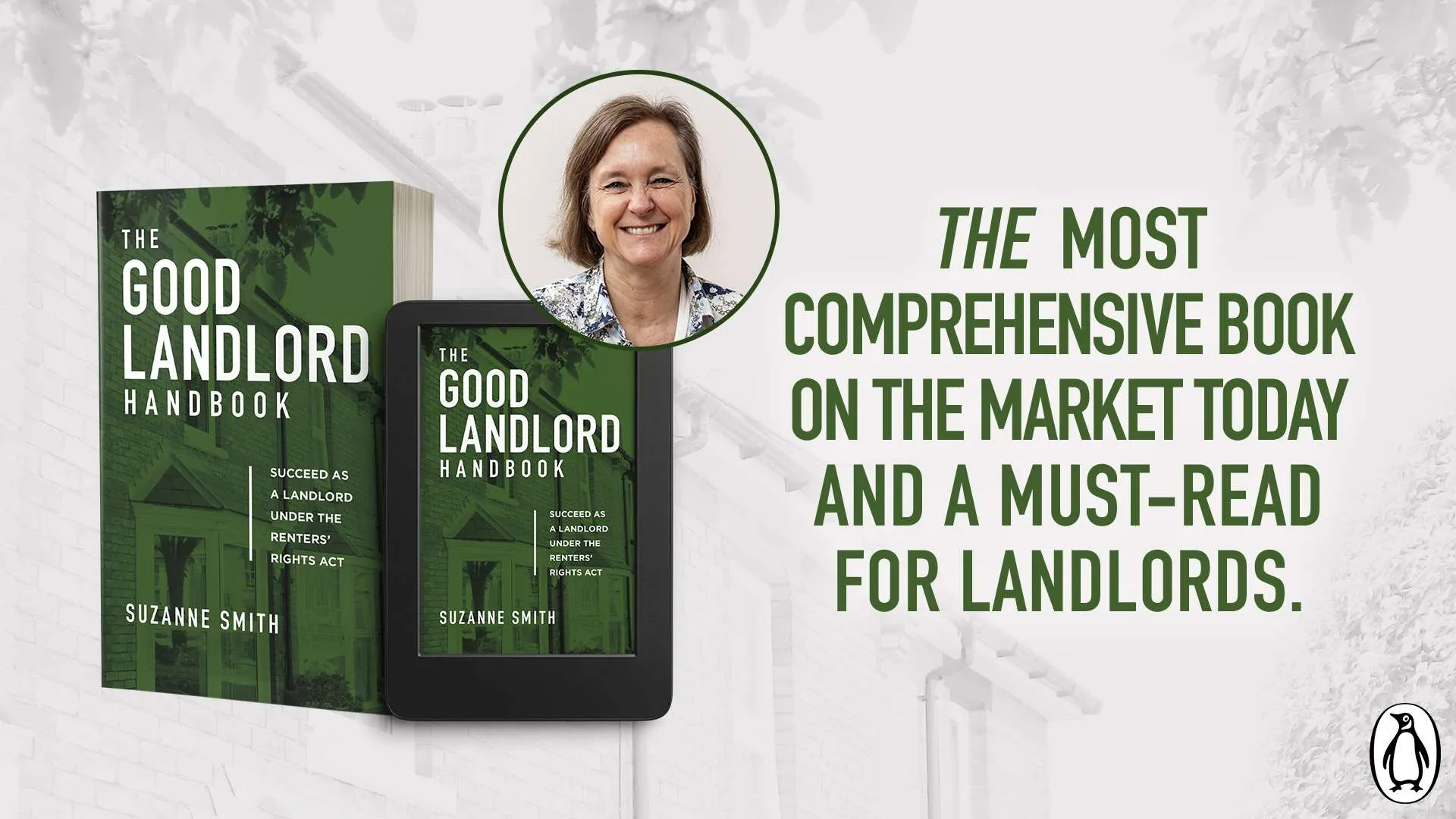
In this post, I go through the 12 things I would check in any letting agent contract before signing, drawing on my 25 years of reviewing commercial contracts as a corporate lawyer, and my own experience as a landlord instructing agents. (I go into choosing and managing agents more fully in my bestselling book, The Good Landlord Handbook*.)
If you’re a letting agent reading this, have a think about whether your own terms are fair. If they’re not, what does that say about how you treat your customers?
>> Related Post: What’s included in full property management services, and the extras that cost more
>> Related Post: Letting agents and the law on unfair terms in contracts with landlords
Quick links: What to check in the small print of letting agents
- 12 things to look out for in letting agents’ terms of business
- 1. Is the termination clause fair?
- 2. Is there a charge for supervising repairs and maintenance?
- 3. What works can an agent carry out without the landlord’s approval?
- 4. How many inspections are included?
- 5. Does the letting agent charge landlords a compliance fee?
- 6. Is there a term that enables the agent to increase the fees or impose new fees?
- 7. Is commission payable on sale of property to tenant?
- 8. Are the renewal fees and continuing fees for tenant-finds unfairly high?
- 9. How much do they charge for increasing rent?
- 10. What are the extras?
- 11. How long is the sole agency period with the letting agent?
- 12. What happens if the agent doesn’t find a suitable tenant during the sole agency period?
- Using AI to check letting agent terms and conditions
- What protection do landlords have under consumer rights laws?
- Mailing list and marketing consent clauses
- Final thoughts
12 things to look out for in letting agents’ terms of business
Landlords must read the terms and conditions in contracts with agents before signing up, as they often include horrors, which may be possible to change before the agent’s appointment.
If you do manage to negotiate a change to the terms, do ask for it to be confirmed in writing. In the event of a dispute at a later date, if you don’t have evidence, it’s as if it didn’t happen.
As a general point, a good letting agent can bring a lot of value to a landlord who doesn’t have the time or inclination to find tenants or manage the property. Landlords shouldn’t just focus on who charges the least, otherwise it’s a race to the bottom, in the same way it has been with conveyancing. Look for agents that provide a high quality service, and have staff who have received at least a Level 3 qualification, such as Propertymark’s Award in residential letting and property management.
But landlords must take care to look through the agreement so you know what they are committing to, and that they can serve reasonable notice to terminate without penalty if they want to in the future, after the initial fixed term expires.
>> Related Post: What landlords need to know about full property management services
Here are a dozen things I would look out for when reviewing agreements with letting agents now the Renters’ Rights Act has come into effect:
1. Is the termination clause fair?
The very first clause a landlord should check is the termination clause. Things change, and the landlord may wish to take over management in the future, or move to another agent. This is their right. Make sure this right is not subject to a penalty.
A fair notice clause would be for the landlord to be able to terminate the agreement by serving a reasonable amount of notice, say 1-3 months’ notice, at any time after the expiry of the first fixed term period.
Here are two common examples of unfair termination provisions that landlords should look out for in their contracts with letting agents:
- A statement that the landlord cannot terminate for so long as the tenants placed by the agent remain in the property.
- A termination penalty, sometimes called a “Withdrawal Fee” or an “Exit Fee”, which effectively ties the landlord in until the tenant moves out.
If the agent will not remove these clauses, walk away. It shows they want to compel landlords to stay with them, rather than rely on landlords wanting to stay because of the excellent service. If they don’t have the experience of their customers at the heart of their businesses, find an agent who does. There are plenty of them out there.
They are also unfair terms and are unenforceable against consumer landlords (see below for more details).
For a detailed walkthrough of how to terminate a letting agent contract, including template letters, see how to terminate letting agent agreements. And to see how the termination clauses of named letting agents compare, including the ones I’ve given a gold star, see letting agent termination clauses analysed.
2. Is there a charge for supervising repairs and maintenance?
Letting agents providing full management services are usually responsible for arranging for repairs and maintenance reported by the tenants, or which are noted during inspections. However, increasingly agents add a percentage fee to contractors’ invoices without making clear what the landlord is getting in return.
Some agents also receive a referral fee from the trades person for using them. This increases costs to landlords.
Let’s look at the mark-ups of two of the biggest letting agencies in their full management agreements (as accessed on 9 July 2026). I’m not saying these mark-ups are unfair. I‘m sharing what questions I would ask to clarify what the landlord gets in return, so the landlord can make an informed decision as to whether they want to arrange any works themselves, or negotiate a different fee. 10% might not be much on a small repair, but it would mount up on a new boiler or replacement windows.
- Connells
- In the fee schedule dated 2 April 2026, Connells state they charge a fee of 10% + VAT on the net cost of works which exceeds £750, in return for: “Arranging access and assessing costs with contractor; Ensuring work has been carried out in accordance with the specification of works; Retaining any warranty or guarantee as a result of any works.”
- The agreement doesn’t say how they will ensure work has been carried out satisfactorily, for instance by a site visit. I would ask them to clarify what this means in practice.
- Leaders
- Leaders (2 June 2026) charge landlords a fee of 12% of the contractor’s invoice to “project manage” any “major works” exceeding £500 + VAT on behalf of the Landlord.
- The threshold is £250 lower than Connells’, and therefore will include some maintenance that doesn’t in reality constitute “major” works.
- The contract doesn’t define what “project management” means, for instance, do they inspect the work in person. It also doesn’t specify if the 12% is levied on the contractor’s net invoice, or whether they charge 12% on the gross amount which includes VAT.
- These are the sorts of questions to clarify with the letting agent, and ask them to send you an email to confirm the conversation so you can rely on the email in the event of a dispute.
3. What works can an agent carry out without the landlord’s approval?
Do check when the landlord needs to approve works. Usually agents will have authority to carry out work without getting prior approval up to a monetary amount per job, eg up to £250 + VAT. However, there may be more than one job in a month, which can end up amounting to more than the balance ordinarily paid to the landlord.
4. How many inspections are included?
Inspections are very important to make sure the property is in good repair and there are no signs of unauthorised subletting.
Check how many inspections the basic fee includes. Some agents only include one inspection every 12 months, which is not enough. It should be at least every 6 months to check the property in summer and winter and to keep an eye on the condition of the property. A lot can go wrong in 12 months.
That said, agents will usually do additional inspections for a further fee.
5. Does the letting agent charge landlords a compliance fee?
Some large letting agencies charge a fee for “compliance” or “Landlord Regulation Checks” on top of the basic management fee.
For Leaders, this is £14.40 inc VAT per month. It’s not entirely clear what this covers, but if the landlord doesn’t pay it throughout the tenancy, the agent excludes liability for any fines or penalties that the landlord is required to pay that arise from the “agent’s failure to ensure compliance”. In other words, landlords need to pay this compliance fee if they’re to have any recourse against the agent for losses that are due to the agent’s failure to (say) advise the landlord they need a selective licence.
Countrywide letting agents, Tucker Gardner, charge £11.40 pcm for: “HMO Licence monitoring, the ongoing management of Deposit/Deposit Replacement Service, Legislative Horizon, Checking Smoke and CO Alarms at commencement of tenancy”. This wording is used for other Countrywide letting agents such as John Wood & Co. The fee isn’t reduced for single lets where an HMO licence isn’t relevant.
Compliance should be an integral part of full management services, and not an extra. Landlords should consider asking for the compliance fee to be removed, and to strike out any clause that says the agent’s liability to indemnify the landlord is subject to the landlord’s payment of the compliance fee.
I think it is very cheeky (even outrageous) for letting agents and property managers to charge extra for compliance checks. It should be included in the standard full management service fee! Look out for this on the property manager’s fees, and ask for it to be waived. If they won’t waive it, go elsewhere. We landlords can vote with our feet.
6. Is there a term that enables the agent to increase the fees or impose new fees?
A clause which reserves the agent the right to increase fees or impose additional fees by notice is an “unfair term” from a legal point of view, unless the landlord is given the opportunity to terminate the agreement after having been given appropriate notice of the change.
If the contract includes a clause allowing the agent to increase fees without the landlord being able to terminate, then ask for the clause to be amended so that it says the landlord may refuse to accept the increase in fees and terminate the contract.
Remember that if you operate through a limited company, you won’t benefit from consumer protection law. This means you won’t have protection from a clause that allows an agent to impose higher fees, which wouldn’t be binding on consumer landlords.
7. Is commission payable on sale of property to tenant?
Is there a clause that entitles the agent to commission if the landlord sells the property to the tenant? If so, ask for this to be removed, as it would be a windfall for the agent who the landlord has already paid for managing the property.
This type of clause is likely to be unenforceable against consumer landlords as it’s an unfair contract term (see below).
8. Are the renewal fees and continuing fees for tenant-finds unfairly high?
Renewal fees were invented for a world of fixed terms, where the agent would charge a fee each time the fixed term ended for the parties to enter into a new fixed term AST, called a “renewal”.
Under the rules before the Renters’ Rights Act came into force on 1 May 2026, it was called a “renewal commission”, as part of the annual cycle of renewing fixed term tenancies.
Now that Housing Act tenancies in the PRS are all periodic and fixed term tenancies have been abolished, there can be no “renewals” unless a tenancy is outside of the Housing Act 1988.
Yet continuing fees and commission for tenant finds haven’t disappeared from many agents’ terms of business, particularly in London, where agents ask landlords to pay a fee akin to an annuity for so long as the tenant stays in the property, even if the agent doesn’t manage the property.
Instead, the terminology has been changed to reflect the end of the annual tenancy renewal cycle. The effect is the same in that the landlord remains obliged to keep paying the fees for so long as the tenant remains, or any shorter period stated in the terms of business.
Foxtons are a good example of this, as they swapped renewal fees for a “Long Term Lettings Service” fee for APTs of 10.8% inc. VAT for the second and subsequent year after a tenant find, even if Foxtons don’t manage the property. They charge an additional fee of 7.2% incl. VAT for management services.
These continuing fees are largely a London phenomenon. Outside of London, landlords typically pay a one-off fee for a tenant-find of around one month’s rent. Before the Renters’ Rights Act abolished fixed terms were, agents would charge around £250 + VAT to “renew” a fixed term tenancy.
If you’re looking for an agent to find a tenant for you, after which you will self-manage, then don’t choose an agent that will charge you a continuing fee for that for the rest of the tenancy.
To be on the safe side, ask the agent to confirm in writing how much you will be charged if the tenant stays for a second, third and fourth year. If they charge an additional fee, negotiate or walk away (unless of course you’re happy to keep paying them for the tenant find for years to come). There are plenty of agents who don’t charge continuing fees.
9. How much do they charge for increasing rent?
As APTs can no longer be renewed, many agents (for instance Connells) now charge a similar amount for rent increases under Section 13, even though the fee can wipe out most, or all, of the increase the landlord was hoping to gain. Also, the landlord would risk having the increase challenged by the tenant in the First-tier Tribunal.
Landlords may well be better off not increasing the rent, or doing it themselves, see How to increase rent using Section 13.
10. What are the extras?
When comparing agents, print off a list of the fees and make sure you’re comparing apples with apples. Some agents may have a low basic fee, but charge a lot of extras. The converse is also true.
There’s no point thinking you’ve got a bargain on an “all-inclusive” holiday if you then have to pay for things that come as standard for a supposedly more expensive package holiday. Dealing with agents is no different.
Here’s a list of common “extras” that some agents include in the basic fee, and other charge as extras. Use it to help you compare apples with apples when choosing agents, check with each agent if they charge for any of the following, over and above the basic fee:
- Creating and executing a tenancy agreement.
- Referencing tenants.
- Handling the holding deposit.
- Carrying out right to rent checks.
- Inventory.
- Checking-in a tenant.
- Registering the tenancy deposit (and even an annual charge for “maintaining” the deposit).
- Sending the prescribed information for the tenancy deposit to the tenants.
- Checking smoke and carbon monoxide alarms (even though the inventory clerk does this).

11. How long is the sole agency period with the letting agent?
Letting agents often include a term such as the following from Leaders:
Sole Agency means that the Agent shall have sole and exclusive rights to market the Property for sale or letting for the period of the Sole Agency and upon the sale or letting of the Property the Agent shall be entitled to the Sole Agency Commission in accordance with the terms set out in these Terms of Business.
Ask the agent to confirm duration of the “period of the Sole Agency”, as this is the period during which the landlord is not permitted to use another agent to find a tenant, without paying commission to the agent. It is a lock-in period.
This sole agency period can range from 4 weeks to 6 months. Landlords should not agree to more than 6 weeks as if a letting agent has not found a suitable tenant within 6 weeks, then the landlord should either try to find one themselves or appoint another agent.
>> Related Post: How to find tenants without letting agents
12. What happens if the agent doesn’t find a suitable tenant during the sole agency period?
Sometimes when a landlord instructs an agent to find tenants on a standalone Letting Introduction/Tenant-find/Let-only service, or even as part of full management, the agent doesn’t find a suitable tenant within a reasonable time. For instance, the tenant may not pass the affordability or referencing checks and a guarantor is needed.
Landlords have the ultimate decision over choosing a tenant; the agent merely proposes candidates.
Landlords should ask the agent what happens if they don’t find a suitable tenant. This is linked to the sole agency period, and if the landlord is locked in for 6 months, the commission still might be payable, even if the landlord uses another agent to find a tenant. The longer the sole agency period, the unfairer it is to the landlord to have to pay commission even if the original agent doesn’t introduce the tenant.
Ask the agent to confirm in writing answers to the following questions:
- What happens if the agent does not find a tenant that meets the landlord’s criteria within 6 weeks?
- Can the landlord go elsewhere or find a tenant themselves? If so, is the tenant-find fee still payable to the agent?
- What is the earliest date when the landlord can go elsewhere if the agent does not find a suitable tenant, without commission still being payable under the sole agency terms.
>> Related Post: How to choose good tenants
Using AI to check letting agent terms and conditions
AI prompt to analyse letting agent terms of business
In this age of artificial intelligence, it’s easy to put the terms of business into your favoured AI model and ask it to point out onerous terms.
I asked Claude Fable 5 to generate this prompt, and it should work in ChatGPT, Claude or Gemini (note my disclaimer – this is just an example, and you’ll need to customise it!):
Context
I am a residential landlord in England and want to use a letting agent to [find me a tenant / find me a tenant and manage my property]. Please act as solicitor experienced in landlord and tenant law, contract law, consumer protection, The Property Ombudsman and Propertymark Codes of Practice, and the Renters’ Rights Act 2025.
Since 1 May 2026, residential tenancies in England are assured periodic tenancies without fixed terms. They continue until the tenant gives two months’ notice or the landlord recovers possession under Section 8 of the Housing Act 1988. Bear this in mind when assessing any clause that refers to fixed terms, renewals, or fees that run for as long as the tenant stays.
Task
1. Read the Terms of Business supplied below in full.
2. Identify and quote any clauses that might reasonably be seen as unfair, onerous or unduly restrictive under:
• The Consumer Rights Act 2015 (unfair contract terms)
• The Tenant Fees Act 2019
• Common-law principles on agency and unfair penalty charges
3. For each flagged clause:
• Explain why it may be problematic (legal risk, financial exposure, inability to terminate, unfair terms).
• State which statute, regulation, code or case law is relevant.
• Indicate the practical effect on me if I sign as is.
• Suggest a plain-English alternative or negotiating position.
Pay particular attention to clauses which:
• Charge fees for as long as the tenant remains in the property. Now that tenancies have no end date, this could mean paying indefinitely.
• Charge ongoing tenant-find fees, renewal fees or anniversary fees where the agent does no further work.
• Charge a fee for a rent increase or for serving a Section 13 notice, and whether that fee is proportionate to a realistic rent increase.
• Impose termination penalties, withdrawal fees or exit fees.
• Allow the agent to vary the fees or the terms unilaterally, without my consent or a right for me to terminate.
• Contain a right to commission if I sell the property.
• Require indemnities broader than standard practice.
• Limit or exclude the agent’s liability below the level permitted by law.
• Still refer to fixed terms, ASTs or tenancy renewals, which may mean the terms have not been properly updated for the Renters’ Rights Act.
4. Summarise in a table: Clause × Issue × Severity (Low/Med/High) × Suggested fix.
5. Keep commentary neutral, factual and in British English. If you are unsure about a legal point, say so. Do not invent statutory references or case law.
Deliverables
A clear, bullet-pointed report (max 1,000 words) I can use when negotiating revisions with the agent.
A draft email to the letting agent setting out the changes that should be made to fairly protect my interests.
Document to review
––– paste the Terms of Business here –––
Other tips about using AI to review terms of business
[This is me writing again 😃]. Be aware that AI isn’t always right, and sometimes may make something up. Even the paid plans.
Don’t just rely on the output that AI gives you, but check everything, even the clauses it refers to. This is particularly true if you are using a free version of a model as the output won’t be as good as the paid models.
If something isn’t clear, or you want more information, don’t be afraid to reply in the chat and ask in the way you might ask a relatively intelligent but very green entry level graduate. Ask for links to sources, and for it to double check.
You’ll also want to put any email in your own words, and weed out the inevitable words like “crucial”, “essential” — and excessive punctuation…
What protection do landlords have under consumer rights laws?
The Consumer Rights Act 2015 gives some protection against “unfair terms” in letting agent agreements to “consumer landlords“. Unfair terms in contracts with consumers are not binding, which means that a letting agent can’t enforce an unfair term in an agency agreement if the landlord is a consumer.
What is an unfair term?
According to section 62 Consumer Rights Act 2015, an unfair term is one where “contrary to the requirement of good faith, it causes a significant imbalance in the parties’ rights and obligations under the contract to the detriment of the consumer.”
Examples of unfair terms in letting agent agreements
Schedule 2 of the Consumer Rights Act 2015 gives examples of unfair terms which include the following:
- Disproportionately high termination fees
- The relevant provisions in Schedule 2 are:
- Paragraph 5: “A term which has the object or effect of requiring that, where the consumer decides not to conclude or perform the contract, the consumer must pay the trader a disproportionately high sum in compensation or for services which have not been supplied.”
- Paragraph 6A: “A term which has the object or effect of requiring a consumer who fails to fulfil his obligations under the contract to pay a disproportionately high sum in compensation.”
- These would cover the case where a consumer landlord wishes to terminate the contract (ie they decide not to perform the contract), and the letting agent imposes a “disproportionately high sum” to terminate full management services.
- The relevant provisions in Schedule 2 are:
- Ability to increase prices without agreement from landlord
- Paragraph 15: “A term which has the object or effect of permitting a trader to increase the price of […] services without giving the consumer the right to cancel the contract if the final price is too high in relation to the price agreed when the contract was concluded.”
- This means that consumer landlords have the right to terminate an agency agreement if the agent increases the fees or adds additional fees
- Terms hidden in small print or not shown to landlord before signing
- Paragraph 10: “A term which has the object or effect of irrevocably binding the consumer to terms with which the consumer has had no real opportunity of becoming acquainted before the conclusion of the contract.”
- Changing the scope of the services after the landlord has signed up
- Paragraph 12: “A term which has the object or effect of permitting the trader to determine the characteristics of the subject matter of the contract after the consumer has become bound by it.”
- If the letting agent reduces the scope of what is included under full management without the agreement of the landlord, it’s an unfair term.
What is a “consumer landlord” under the Consumer Rights Act 2015?
Section 2(3) Consumer Rights Act 2015 defines a consumer as “an individual acting for purposes that are wholly or mainly outside that individual’s trade, business, craft or profession”.
Note the reference to “an individual”, which means an unincorporated landlord who owns the property in their own name (or jointly with another individual).
It’s likely that an unincorporated landlord will be a consumer for the purposes of the Consumer Rights Act if they have another job or profession. On the other hand, they won’t be a consumer if they’re a full-time landlord running a business providing rental properties. The number of properties they have is not important; it’s whether being a landlord is their main business.
(As an aside, landlords are not considered consumers under the Digital Markets, Competition and Consumers Act 2024.)
>> Related Post: Letting agents and the law on unfair terms in contracts with landlords
Do landlords with limited companies have consumer protection in dealings with letting agents?
In a word, no. Only “individuals” can benefit from consumer protection, and an individual must be a human being, and not a legal entity, such as a limited company or a limited liability partnership.
This means that landlords who operate through a limited company have no legal protection against unfair contract terms in contracts with letting agents. This is even the case where they have another job or only own one buy to let. The fact they used a limited company to buy the property disqualifies them from consumer protection.
So, if you’re a landlord who doesn’t hold your properties in your own name, you have no legal protection from unfair contract terms. As you’re a business, you’re deemed capable of fending for yourself in the negotiation of contracts.
Before you sign up, ask for the agent to send you the contract, and go through it with a fine-tooth comb. Caveat emptor (the buyer beware).
>> Related Post: How to resolve problems with letting agents
Mailing list and marketing consent clauses
Terms of business sometimes include a clause that states the landlord agrees to be on the agency mailing list. It’s usually buried near the signature block: by signing the terms, you consent to receiving marketing from the agent, and sometimes to your details being shared with “carefully selected partners” (which can mean referral fees for the agent, and third party spam for you).
You don’t have to accept this. Strike the clause through before signing, or tick the opt-out if there is one. And even if you’ve already agreed, you can withdraw consent to marketing at any time by clicking unsubscribe from any email.
Final thoughts
The small print of a letting agent contract tells you a great deal about the agent before you’ve paid them a penny. An agent who is confident in their service doesn’t need a long notice period or an exit fee that ties you in until the tenant leaves. The good ones keep landlords by doing the job well.
Read the terms of business before you sign, negotiate the clauses that matter (termination first), and remember that everything is negotiable while the agent is still trying to win your business. If an agent won’t move on an unfair clause at the start of the relationship, that tells you how the rest of it will go.
My advice is to avoid agents who include unfair terms in their contracts. Why is this? They are not fair and reasonable to deal with, and would rather force unhappy customers to stay with them because of the exit penalty, rather than be customer-focused and genuinely try to understand why landlords might want to leave, and thereby improve their service.
Having unfair terms shows a mindset that is not focused on delivery of a high-quality service. It is not a sustainable business model, and does not create a happy workplace when you require your staff to enforce terms they know are unfair.
Landlords need to remember that they have a genuine choice of letting agent. Even small towns have a multitude of agents.
We should all vote with our feet and only sign up with agents who do offer fair terms. They do exist, and it’s a question of making sure your chosen agent is fair and reasonable, and dedicated to providing you and your tenants with a wonderful service.
PS If you like this practical advice, you’ll love my bestselling book, The Good Landlord Handbook, which is full of useful information for every stage of a tenancy, in compliance with the Renters’ Rights Act.
>> Related Post: How to self-manage your buy to let
>> Related Post: What landlords need to know about full property management services

* As an Amazon Associate and a Waterstones affiliate, I earn from qualifying purchases

I could not agree more with your comments. Many Landlords fail to realise that if the Agent does not do something correctly then it is still the Landlord who will be taken to court or have to provide the missing Deposit! There is still a belief I find at meetings, from many Landlords, that because they employ an Agent to run the Letting they are absolved from any responsibility or Liability!
As an Agent who has been involved with training and supporting Landlords for many years now, it has always annoyed me how some of the other Agents are so devious and fail to respect their Landlord customers and treat them as cash cows!
The rise in complaints to the PRS about Agents highlighted in their Annual Report backs up the dissatisfaction with their services and practices out there.
This is compounded by the rise generally in SME’s facing financial difficulties and in particular it appears affecting Letting Agents and Estate Agents, some of which have closed suddenly, is a big concern for Landlords who can be left in a very difficult position and no form of recourse.
It is ironic that this is exactly the topic I am covering when I speak at the free to attend GB Landlords meeting in Canary Wharfe next Wednesday evening (27th).
I can never stress enough to Landlords that choosing your Agent and understanding how the relationship will work and what you can expect from them, is as important as choosing the right Tenant!
Such good points! Thank you for taking the time to add your thoughts to the post and good luck with your meeting of the GB Landlords on 27th March. I’m pleased you’re discussing it and it definitely shows that GB Landlords are on the side of landlords.
I have been trying let out my property for a very long time. I have found another agent, [*****] who seem good, but they have amalgamated with other agents, one whom I know, and will charge £300 exit fee, and also they want me to use them as a sole agency. The extra costs are: an Inventory or inspection for £120, Repairs maximum of 20% inc VAT on any repairs. Anything outside the scope £60 per hour inc VAT (£50 plus VAT) the management agreement.
They do an option scheme, and I would want Option D Full management which is expensive.12% of monthly rent plus VAT 14.4% inc VAT subject to a minimum of £48 inc VAT (£40 plus VAT). They charge a lot for other services. Mid-term inspection is £54 inc VAT. Move out report £54 inc VAT. Tenancy Renewal £75 inc VAT.
They will charge the same as the exit fee if I appoint another agent as well as themselves. They say they have the right to charge me if I appoint another agent as a multiple agency.
If there is a dispute that arises between the Landlord and the Tenant concerning the deposit, then they charge a cost of £120 inc VAT or £30 inc VAT per hour.
There are other charges for various services that are additional only.
Please let me know your thoughts on these agents, or if there is anything else about them I should know. Thank you.
I redacted the name of the letting agents. On the plus side, they lay out their fees clearly, but I’ve never seen £120 hourly rates for handling deposit disputes – that’s almost the level that law firms charge for qualified solicitors. A 20% mark up on repairs is the highest I’ve seen.
Have you done a “mystery shop”, posing to be a tenant responding to an ad. Are they efficient and pleasant with potential customers? Are the agents trained, with Level 3 qualifications? How often do they do inspections? Are they good? Also, why has it been difficult to find tenants for your property, bearing in mind demand is high. Have you been trying to charge a rent that’s higher than the market? Is there something wrong with the property?
My Lettings agent sold off their business in Scotland without consultation with their clients stating they were bound by a non-disclosure clause during sale.
They basically sent an email to Landlords then 2 hours later Tenants informing them they had sold their business to another company, and they would be managing the properties from now on.
Whilst trying to engage with them the MD he attached a cut and paste of a generic T&Cs stating they were mine saying they were within their right to sell. I have no doubt they do, but to sell off my assets, tenants and details without consultation is a huge concern to me as I did not know who they were sold too.
He then would take nothing to do with an ongoing issue I had at one of my properties and told me to speak with the new owners. Surly this is bad business!
The responsibility of a lettings agent to undertake annual rent review is not mentioned. Is this a recognised industry norm or does it have to be stated in the agreement?
Letting agents only need to do what is in the agency contract. Some include a rent review, others don’t. When I used agents for tenant finds (not management), I would be contacted each year about a rent review as they’d be able to charge me for it!
My agent has updated the terms of business to include a termination fee of 1.5x the monthly Rent on top of the notice period fee’s and have not agreed this with me. I have 2 property’s with them this increases the fee to leave from £465 to £4200 and I am only leaving because of the poor service they have provided and failing to keep my property compliant on health and safety. They are being very forceful with this invoice. I’m a consumer can they enforce these fee’s?
Regards
Assuming this happened only recently, tell them you don’t accept their updated terms and conditions, and ask to be released from the contract. If you’re a consumer, it’s unlikely they can enforce them. If their service is really bad, you might be able to terminate for material breach of contract.
My Agent, who I selected from 6 local agents, have found a tenant and we were progressing on a fully managed basis. I was expecting to be asked for ID, proof of address & ownership etc. but none of this has happened (I understand this is not a legal requirement, but as a retired banker just expected this to happen). I have asked twice (verbally and now in writing) for a contract and they don’t do this. This to me seems crazy and I am wondering whether to proceed with the fully managed service. I don’t want to lose what seems to be a good tenant, but the only solution I can see is to move the arrangement to a ‘tenant find’ service instead and manage the property myself. Phew, any thoughts.
Have you signed an agency agreement with them? If you haven’t, that can help as you won’t be bound to them. Moving to a tenant find service does seem a good option. To do the right thing, and keep the tenant, you could offer to pay what they charge for a tenant find, and then say you want to transfer to self-management. If they don’t offer tenant-find, you could offer to pay the first year’s management cost, but to be released straight away. If they won’t play ball, go through the complaints procedure and the redress scheme.
Good luck!
I have been with an agent for a year and the service was pretty terrible, and I’ve moved agents but kept the same tenants at renewal. The agent is now trying to charge me 2x month’s rent as a withdrawal fee. It did state this in the contract that I signed but as a new landlord I wasn’t really equipped to know what to look for in the contract. Reading your article on unfair terms for a consumer landlord, I’m now challenging whether this is a fair charge. Do you think I have a leg to stand on?
Yes, it sounds like you’re a consumer landlord and you should challenge it. This has good templates: https://theindependentlandlord.com/terminate-letting-agent/
Hi, I am a first time accidental landlord and signed an agreement with an agency that found me what seems to be a good tenant, we are proceeding with search only so we will manage the relationship once the tenant moves in. Only now after reading this article and using your very helpful prompt I have fully understood one clause that reads:
“If you terminate our appointment but continue the Tenancy with the
Tenant introduced by us, even if the renewal or extension of the Tenancy is negotiated by another agent, you must pay us a
Commission fee equivalent to the Standard Letting Service fee until
whichever of the following occurs first:
• the Tenant leaves the Property; or
• 60 months from the date the Tenancy commenced”
So basically we will have to keep paying them if this tenant wants to stay after the first year that he signed for even if we handle the renewal ourselves and terminate with them. 60 months seem awfully long to me, is there anything I can do at this stage or is it too late? Or is this standard? Thanks!
This is not (or should not) be standard and is just the type of clause I’m trying to draw the attention of landlords to – it’s a “renewal fee”, where they keep being paid, even if they don’t do any work. Email me the contract – suzanne.smith@theindependentlandlord.com
I am an agent and refer to the banker’s questions about landlord ID and proof of address and ownership (Jacqui 9th May 2025). I am surprised that there was no observation offered on this. I insist on this information which is even more important given the recent obligation to search the financial sanctions register introduced on 14th May 2025, I believe
Otherwise very good session on T & Cs which I would agree we need to exercise greater caution with
Hello. I don’t always reply to every single comment under all of my blog posts (it’s just me doing all this), and this blog post is about letting agents contracts, not what letting agents do. But your observation about letting agents needing to verify the identity etc of landlords is well made. Thanks.
So I have tried to get my property agent to change their Ts and Cs but they simply refuse…say that can’t change their standard Ts and Cs. We are in a bit of a bind as our tenants disappeared overseas, so we want to claim on the deposit while we find other tenants, but we’ve been warned that if we delay in re-marketing the property, we won’t be able to claim the full amount of the deposit….and this means that we don’t have time to go and find another agent. I have tried to flag all the issues with the contract (which seems v unfair eg no indemnity if they fail to carry out their duties and that causes us loss…. and a 6 month tie-in followed by 6 months notice for management services ie 12 months before we can exit that arrangement…. and letting fees are due until the tenant leaves the property which post RRA is now potentially forever!) but they know we’re in a bind and they simply refuse to budge.
Go elsewhere. A letting agent can sign you up the same day.