

Are you wondering how easy it is to find tenants yourself online, advertising your property on Rightmove and Zoopla, without going through traditional high street letting agents? After all, with rental demand high, surely it can’t be too difficult?
The short answer is that it’s not that difficult to find tenants yourself, using online letting platforms such as Hello Neighbour or OpenRent to advertise on Rightmove, Zoopla and OnTheMarket. It will cost you somewhere between £60 and £130, instead of a month’s rent or so, and the platform will handle the deposit and the tenancy paperwork. However, you’ll have to get organised, learn the rules, screen the applicants, do the viewings, make a selection and take up references.
I have used online letting platforms many times, and share the benefit of my experience in this detailed blog post, which walks through each step for private landlords in England.
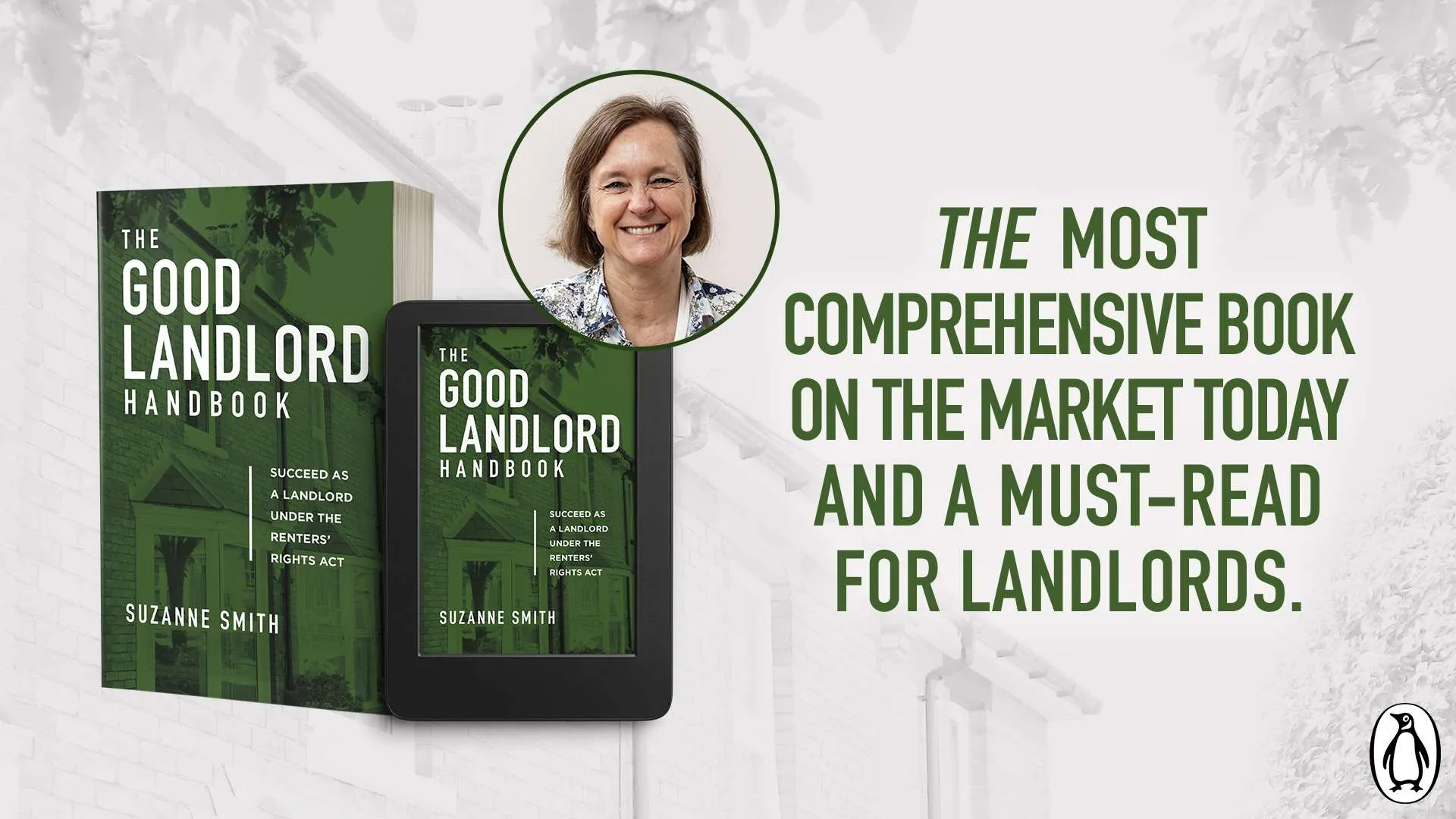
For the full picture, see my bestselling book, The Good Landlord Handbook*, which provides practical information and checklists at every stage of the tenancy, in compliance with the Renters’ Rights Act.
>> Related Post: How to find tenants yourself using OpenRent
>> Related Post: Review of the Hello Neighbour online lettings platform
Last updated: 30 September 2026
How to let your property yourself at a glance
- My experience with traditional letting agents
- Deciding to let my rental properties myself
- How to set the right rent
- Register your rental property on the PRS Database (coming soon)
- Data privacy
- Creating the listing for Rightmove and Zoopla
- How to choose great tenants
- Finalising the tenancy
- Last steps
- Final thoughts
Affiliate disclosure: As an affiliate of OpenRent, Amazon, Waterstones and NordPass, I earn from qualifying purchases if you click on a link to their website. Any commission helps fund this free website. I am also an independent non-executive director of Hello Neighbour, but I do not earn any affiliate income or otherwise benefit if you click on a link to Hello Neighbour.
My experience with traditional letting agents

Like many accidental landlords, when I decided to let the flat I owned, it didn’t occur to me I could find renters without a letting agent. I also wouldn’t have known where to start. Agents made the process sound difficult, and I didn’t have the confidence to strike out and do it alone.
So, I chose a good local agent, we agreed a rent of £1,490 and they found wonderful tenants for £2,040. This was on a “let only” basis as I had decided to self-manage. It went like clock-work. Happy customer.
Fast forward two years, I’d bought two buy to lets in another town, and used the letting department of the estate agents I bought through. However, the service I received from them was pretty poor. No floor plan, amateur photos, slow receipt of tenancy agreements, slow referencing, and poor communication. To top it all, the lettings manager didn’t brief the junior who did the viewings properly. This was despite the fact I’d prepared a note in a word document for them. Unhappy customer.
Having totted up the sums, I realised I’d spent £7,650 in letting agent fees for four tenancies over two years. Yet, the service had not been good. It’s no surprise I began to wonder if I could not only save myself the money, but also do a better job! And of course the cost of using letting agents has gone up even more since then!
Deciding to let my rental properties myself

When I bought another buy to let in May 2022, tenant demand was (and still is) very strong. I therefore decided that it must be a good time to test if I could do better than the high street agents. Not mentioning that I’d be saving myself more than £2,000 in the process!
I’d read a lot about the various online letting platforms that give landlords access to the key portals for around £50. However, I chose OpenRent as it was then the best in class of the online letting agents.
I used their Rent Now full tenancy creation service. This includes a tenancy agreement, the deposit collection and registration with MyDeposits and the initial rental collection. It cost £69 at the time, including advertising on Rightmove.
With hindsight, self-letting was the right decision for me and I’ll certainly never go back to using high street letting agents.
OpenRent still offer Rent Now, but including Rightmove, the cost has since almost doubled, and is now £128 (28 September 2026).
This is still excellent value, compared to traditional letting agents. That said, I’ve now switched to Hello Neighbour, a next generation online letting platform. I joined their board as an independent non-executive director in May 2025, and have helped them understand what landlords are looking for in an online letting platform.
How to set the right rent
The first step is to set the right rent, that is around the market rent for a property in the same condition in your local area.
It’s important to be objective about the pros and cons of your property relative to the local competition, so you don’t fix the rent too high or too low. If it’s too high, you get no interest. If it’s too low, you get too much interest.
I usually price mine at the top end of the range. Why? My houses are all in excellent condition, on good roads, with EPC Cs and gardens.
My properties are all within a 500m radius, and I know the rents I achieve for my other similar properties. I have had an alert set on Rightmove for new rental properties in the area since 2019, which means I understand what similar properties go for, and how the market has been moving over the years.
Be aware that since the Renters’ Rights Act came into force on 1 May 2026, tenants can challenge the rent in the first six months of a tenancy at the First-tier Tribunal on the grounds that it is above the open market rent for a similar property in the area.
You also can’t accept offers above the price you advertise it for, as that would break the new rental bidding rules. Keep records that support your decision on the rent level. Offers from other applicants at the same rent are useful evidence if the tenants challenge it.
>> Related Post: The changes to the rules about rent in the Renters’ Rights Act
Register your rental property on the PRS Database (coming soon)
The “Register your rental property” service will start rolling out for landlords on a regional basis from 15 December 2026. Each region has a deadline in 2027 by which landlords must register themselves and their rental properties if they are let, or about to be let.
For more information, see the blog post, The PRS Database: how to register your rental property.
Data privacy
It’s easy to forget just how much personal information a landlord receives from applicants and tenants. This is true for all but the most hands-off landlords, and is particularly true for self-letting landlords.
In order to enter into a tenancy agreement with someone you have found and referenced yourself, you’ll have access to the following information of the tenant: full names, dates and places of birth, current and previous addresses, nationality and passport details from the Right to Rent checks, employers, salaries, bank details, credit history.
That’s everything a fraudster needs to open an account in someone else’s name. The people it belongs to are trusting landlords to look after it.
Two things follow from this. First, you need to keep the data secure, which in practice means password-protected files and a secure online filing system with complex passwords (I use NordPass to generate and store passwords securely). Second, don’t keep what you no longer need, and delete the details of the applicants you turned down once the property is let.
You should also have a data protection notice for tenants. It sets out who you are, what information you collect, why you hold it and what you do with it, and applicants should see it at the point you ask them for their details. I link to mine from the tenancy agreement and the application form. If you don’t have one, you can adapt my one here: Landlord Data Protection Notice for Tenants.
You also need to register with the Information Commissioner’s Office. It’s very easy to do this online, and it takes about five minutes. The ICO will email you with a request for payment after you’ve applied to register. The fee for a landlord to register with the ICO is currently £52, although there is a £5 discount if payment is by direct debit.
>> Related Post: What data protection rules do landlords need to comply with?
Creating the listing for Rightmove and Zoopla
What material information must be in listings for residential rental property?
Your listing needs to contain information to help tenants make informed decisions.
This is not only the right thing to do, but Section 230 of the Digital Markets, Competition and Consumers Act 2024 (DMCCA) requires landlords to ensure that the listing contains sufficient “material information” so that a prospective tenant can make an informed decision about whether or not to arrange a viewing, put in an offer to rent or go ahead with renting the property.
The DMCCA superseded and replaced the Consumer Protection from Unfair Trading Regulations 2008 (CPRs) with effect from 6 April 2025. The previous guidance for letting agents on what material information should be included in listings, which was based on the CPRs, was withdrawn shortly afterwards.
The government consulted on material information in property listings from 6 October to 29 December 2025. We await the outcome of the consultation.
In the absence of official guidance, and taking a common-sense approach, here is a list of information to include in the property description to help a potential tenant decide whether to view a rental property, put in an offer or actually rent the property.
- Rent and the time period (eg per calendar month).
- If bills are included, the listing should specify which bills these are.
- Council tax band.
- EPC rating, if there is one, and it must be supplied within the relevant timescales if not.
- Details of the deposit and any holding deposit that the landlord requires.
- Property type (flat, terraced house, semi-detached house, detached house etc).
- For flats in a larger building, the floor of the flat should be specified eg ground floor.
- The number of bedrooms.
- Details of non-standard utilities (eg septic tank, metered water).
- Broadband speed. Rightmove include this, but landlords can check it here on this OFCOM page.
- Any known problems with mobile phone signal. Landlords can look this up on this OFCOM page.
- Details of any parking available eg residents parking, off-street parking, on-street parking.
- Building safety risks (unsafe cladding, presence of asbestos, unsafe flooring, etc).
- Flood and coastal erosion risks. Has the property been flooded within the last 5 years? What are the sources of risk (river, sea, ground water, surface water), whether it has sea defences, etc).
- Whether the property is in a coalfield or mining area.
4 tips to make your rental property stand out on Rightmove and Zoopla
The aim of listing a rental property on the portals is to let it to high quality tenants. However, so many rental listings by letting agents are poor, without decent photos, a floor plan or a video. Letting agents justify this by saying there’s no point taking the time to create a stand out listing, as it will rent quickly anyway. I disagree.
When I advertise one of my rental properties, I want the listing to attract as many people as possible. This increases the odds of a great applicant clicking on “arrange a viewing”, and a good selection of suitable applicants to choose from.
Let potential tenants see how your property flows. Will it work for them? Giving them the information they need will help weed out time-wasters. It will also encourage out-of-towners to make the journey to view the property.
Tip 1: Create a great property description
The online platform will guide you through creating the property description and the terms of the tenancy on offer. For instance, the pet policy, number of tenants, deposit amount (I went for 5 weeks) etc. If you don’t feel comfortable with writing your own property description, the website can generate one for you.
I was never particularly pleased with the descriptions for my rental properties written by the letting agents. Therefore, I invested a lot of time to get it right. In order to find examples of best practice, I researched turns of phrase which top London agents use. I started with a few bullet points as an overview to highlight the property’s key attractions. Then I described the property in more detail in sentences, using the top agents’ turns of phrase.
Finally, do make sure your listing includes all the material information that I list above.
Tip 2: Take lovely photos

Although photographs are so important in helping you find great renters, letting agents often don’t bother with professional photos. They claim it’s not worth the time and effort, as it’ll let anyway. I think this is wrong. In order to attract the best tenants, it is worth investing in quality photography.
I also can’t understand why letting agents don’t upload many photos onto the portals, as it gives the impression there is something to hide when there aren’t many photos.
You can buy professional photos from the online letting platforms, but it is possible to take them yourself.
I did not use a photography service as I am confident in taking my own photos. However, you can use a mobile phone, or a camera, as I did. The photos are best taken in landscape mode for the property portals. As I don’t have a wide angle lens, I use the standard kit lens that came with the camera. It was fine.
If you don’t have special lighting equipment, shoot the interior photos around midday, when the light is best.
A tripod gives height consistency to the photos, and I use a timer on the camera so I can put the camera in the far corner and run out of the room, so I’m not in the shot. That way, I achieve the widest possible shot with a standard lens.
I touch up the photos in Lightroom to even out the lighting. You can also use Canva.
Be sure to move the bins and general clutter out of the way for the exterior shots. I had to keep moving things in the house (eg packs of tiles, decorating clutter) so that the photos and video were clear of “stuff”. It’s worth making the effort and is something letting agents often don’t do.
Tip 3: Prepare a floor plan
Letting agents rarely prepare floor plans, unless they were available from the purchase of the property. Again, their rationale is that it isn’t worth the effort as the property will let anyway. I disagree.
Successful businesses have the needs of their customers at the heart of everything they do. It is no different for landlords. Prospective tenants like to see the floor plan so they can understand how the property flows.
Even a standard Victorian house has so many variations, and it’s useful for potential renters to see how it is laid out. Where is the bathroom, is there a separate hallway, is the kitchen in the middle reception room or at the back, how big are the rooms, is there a cellar?
I use a laser to measure the room dimensions accurately and quickly. It makes it really easy to do a professional job. Click here for the link to Amazon to buy the laser measure I use.
I paid under £10 to make my own floor plan from Metropix. I had no previous experience of doing floor plans. It was a bit fiddly, but it will be quicker for my next property. I can also use the floor plan when I market the house again in the future. Money well spent.
And most importantly, all of the prospective renters who viewed the property said that they appreciated seeing the floor plan.
Tip 4: Film a simple video
Very few letting agents do video tours for rental properties, even at the top end of the market in London.
In order to make my property stand out on the portals, and to help potential tenants to decide whether to view the property, I do my own videos.
Before creating my first video, I did my research by looking at some of the videos made by the London estate agents to sell properties in London. I made a short 60 second video, copying some of their techniques. For instance, I sped up the tour, and edited it so I didn’t spend too much time walking up the stairs. I lingered in the main rooms, and showed the view out of the windows to the garden. I also walked the length of the garden to show its size and aspect.
If you’re used to doing videos and reels on Instagram, you’ll find it easy to shoot a video. You can even use your phone to do it. I used my camera to film it horizontally 16:9 (unlike Instagram reels which are vertical 9:16).
Everyone who views the property says they appreciate the video tour, and that they had watched it multiple times before coming and were happy with the layout.
How to prepare the online listing yourself for Rightmove and Zoopla
It’s really easy to create a listing to advertise your property on Rightmove and Zoopla. Here are the 4 steps you need to follow to create your listing:
- Create the description of the property (see above). Make sure the description contains all material information.
- Upload the photos, floor plan and link to the video tour onto the platform, before previewing the listing.
- The platform will prompt you to upload the EPC, Gas Safety Certificate and EICR onto their website, and will send a copy to the tenants.
- Upload proof of ownership for the listing to go live on Rightmove. I uploaded the Building Insurance for my first property, as the Register of Title had not yet come from the Land Registry. It went live first on Zoopla, and then took a few hours for Rightmove to list the property.
I choose for my listings to go live on a Monday morning as letting agents have previously said to me that this is the best date to list properties for sale. However, in a strong rental market, it probably doesn’t matter when the listing goes live. So try and plan it around your own availability to do viewings.
How to choose great tenants
Screening applicants
After all the hard work getting the listing right, prospective tenants soon start getting in touch to arrange a viewing. Contact is via a messaging service on the letting platform to ask for a viewing or for more information. I receive email and text alerts when someone messages me.
As rental demand is fairly high, be prepared for a lot of enquiries for viewings. Consequently, in order to be efficient, it’s best to screen for suitability before they view. From my perspective as a landlord, the key consideration at the moment is affordability. Usually, affordability is measured by the combined salary of the renters being at least 2.5 times the rent.
In order to screen tenants, I respond to their enquiries with a standard message, asking to speak to them to “check for suitability before booking them for viewings”. I then arrange to call them, withholding my telephone number out of precaution. I ask questions to check for suitability before booking them for a viewing at the property.
Apart from affordability, I ask why they are looking for a property, what attracts them to the area, do they have any links with the area, and how long they are planning to rent for.
I arrange viewings with those applicants who seem suitable in principle. When I have several applicants to choose from, I select the family who is able to move in the earliest, has good links to the area and whose need for a property is greatest.
You can find more detail on how to choose good tenants in the blog post below.
>> Related Post: How to choose good tenants
>> Related Post: Tips to help landlords carry out viewings safely
Tenant application form
Before you decide to go ahead with anyone, ask them to complete a written tenancy application form. That means every adult who would be living at the property, not just the ones paying the rent. If your prospective tenants have a grown-up child at university coming with them, they fill in a form too.
When to ask for it is a judgement call. Some self-letting landlords require the form from everyone before they will even arrange a viewing. I don’t as it puts people off, and it leaves you holding a stack of personal data about applicants you will never hear from again. As you will be registered with the ICO and handling that data as a landlord, less is better.
I therefore wait until I have made a provisional decision to take their application forward, then I send the form. The ones who fall away before that stage never give me more than a name and a phone number.
When the completed form comes back, read it properly rather than skimming it. This is the point at which you can still walk away cheaply. If something in the answers changes your mind (a gap in the rental history, an income figure that doesn’t add up, a question left blank), you can decline before you have asked for a holding deposit or paid for referencing, and move on to the next applicant on your list.
Carry out referencing
Applicants sometimes don’t tell the truth and hope the landlord or agent won’t ask for references, so don’t be tempted to skip or shortcut the referencing process, even if someone is desperate to move in straight away.
I’ve had several applicants give me blatantly false information, and I was able to reject them when I got the referencing reports. It was money well spent.
Professional referencing that uses open banking will tell you whether the person is who they say they are, whether they can afford the rent, and whether they have a history of paying it in full and on time. It is not the same as an application form: the form is what the applicant tells you, and the reference is what the checks show.
A full report runs to somewhere between 10 and 15 pages, depending on the provider. Expect it to cover a reference from the previous landlord (or letting agent), verified income and an employment check, an affordability rating, a credit check including CCJs, linked addresses and fraud markers. It will usually give you the contact details for the previous landlord and the employer as well, which is useful if you want to pick up the phone. I do.
That level of detail is what makes the report worth having. You can set it side by side with the tenancy application form and see whether the two match. When they don’t, that tells you something.
There is one more reason to do it properly. Rent guarantee insurance for a new tenancy depends on full professional references having been taken, and the insurer will want to see them before paying out. If a letting agent is finding the tenant for you, check that they have obtained full references and not the abbreviated version, or you may find the policy does not respond when you need it.
Lots of companies offer referencing to self-letting landlords. It costs around £30 per applicant, and I have never regretted paying it. Skipping it is a false economy.
>> Related Post: How to find and choose good tenants
Finalising the tenancy
Once you have chosen your tenants after successful referencing, the rest of the process is straightforward. You approve the applicants on the portal, insert the start date of the tenancy, and they confirm they want to rent the property. They pay a holding deposit of one week to the platform that is set off against the first month’s rent. You also need to check they have the right to rent.
The letting platform sends the tenants all of the required documentation such as the EPC, and the prescribed information for the deposit registration mentioned above. You will receive the first month’s rent about 10 days after they move in.
You will also need to ensure you have served the relevant documents on the tenants, and that your assured periodic tenancy agreement contains the compulsory information known as the “written statement of terms“. You can’t ask for or accept any rent before the tenancy agreement has been entered into.
For more information on how to set up a tenancy, see my blog post Step-by-step guide to entering into a new Assured Periodic Tenancy, and the YouTube version below.
Once the regional deadlines to register on the PRS Database have passed, landlords will have 28 days to update the “Register your rental property” service to show the number of occupants and the rent achieved.
>> Related Post: The rules banning rent in advance in Renters’ Rights Act
>> Related Post: How to carry out a right to rent check
Last steps
In order to have the condition of the property recorded objectively, I recommend using a professional inventory service. This is because all parties know that the condition of the property has been recorded independently in detail. It’s fair for the landlord and the tenants.
When it’s move in day, meet the tenants at the property to hand over the keys and talk them through the various quirks of the property.
As well as a welcome gift, I leave my tenants with a QR code to take them to the password-protected house manual on my website, plus hard copies of the instruction manuals for the appliances.
>> Related Post: Checklist for new tenants: getting ready for check in
Final thoughts
Having now gone through the process a number of times with both OpenRent, and now Hello Neighbour, I’ve been surprised just how easy it was to find renters with an online letting service.
It is actually far less hassle as I don’t need to phone for updates, or hear feedback second hand. I have found it easy to do the viewings, meet the applicants and make the decision myself. It has also meant I started to build a relationship with the renters from day one, rather than the letting agent handing it over.
Finally, it has saved me a substantial amount of money. I will never use a traditional letting agent to find tenants again.
PS Fillable templates and checklists are available in my membership, The Independent Landlord Hub, where you can ask me questions at twice-monthly livestreams.
>> Related Post: How to manage a rental property yourself

Thanks for your blog, nice to read. Do not stop.
Thank you so much for the encouragement, Mark. Much appreciated! 🙂
Very helpful to read through – thank you.
Very helpful information much appreciated Suzanne for this as I ponder whether to become a landlord
Thank you, Suzanne. This is invaluable as I’m going to try to find tenants without an agent for the first time. One question: did you need to add some clauses to OpenRent’s AST, or did you find it comprehensive?
Thank you. The OpenRent AST was fine. I only added something referring to my Pet Policy.